
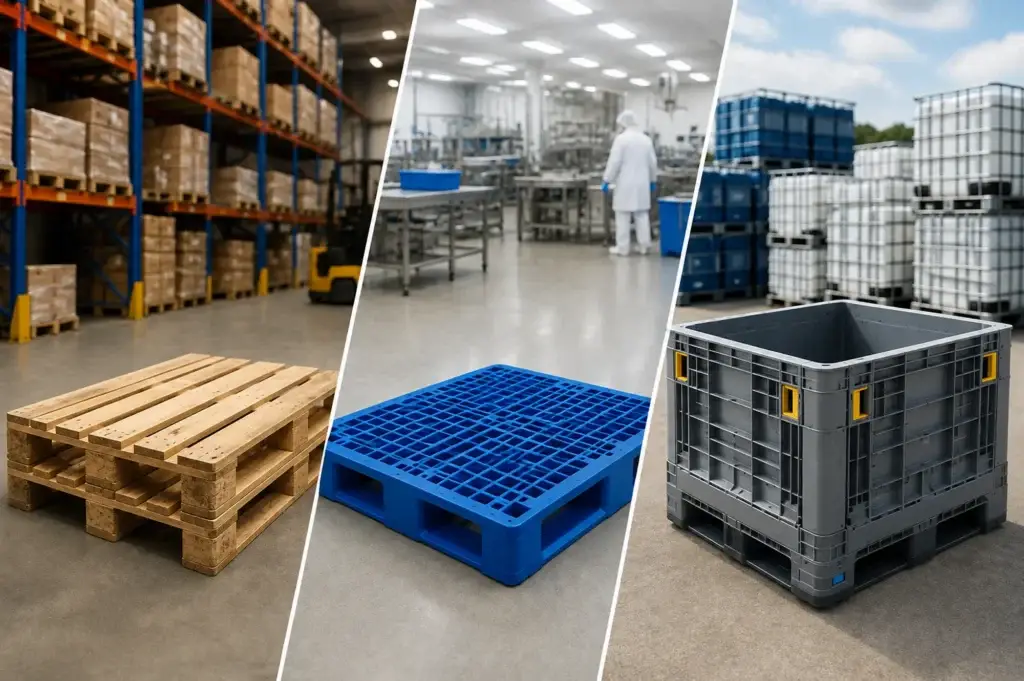
The cheapest pallet can easily become the most expensive purchase in your warehouse. Many businesses continue ordering the same pallets simply because they’ve always used them.
But operations change. Warehouses expand, shipping volumes increase, automation is introduced, and customers expect faster deliveries. Your current pallets and containers may still be useful. The bigger question is whether they fit the way your operation handles products today.
Start by Asking These 6 Questions
What are you shipping?
A pallet that performs well under boxed consumer goods won’t necessarily work for steel components, fresh produce, or bags of raw ingredients.
For example, boxed inventory may only need a stable pallet base, while loose parts or irregular components are better protected inside bulk containers. Matching the equipment to the product reduces unnecessary handling before the shipment even leaves your facility.
Is the pallet used once or repeatedly?
If your customer keeps the pallet or disposal is expected, investing in a reusable system may not make financial sense. A quality wood pallet is the practical option for one-way freight.
But if products move between your facilities, suppliers, or customers on a regular schedule, each returned pallet spreads its purchase cost across hundreds of trips. In those situations, plastic pallets or bulk containers become the better choice over time.
Will moisture or chemicals be involved?
A climate-controlled distribution centre has different requirements than a cold storage warehouse, food processing facility, or chemical plant. Moisture, frequent washdowns, and exposure to cleaning agents can shorten the lifespan of some materials while leaving others largely unaffected.
If your equipment is regularly exposed to wet or sanitary environments, plastic pallets and bulk containers are easier to maintain and clean.
Do you need export compliance?
Wood pallets used for export typically need ISPM-15 heat treatment before entering many countries. Missing that requirement can delay shipments and create unexpected costs.
Plastic pallets avoid that step altogether because they aren’t subject to the same treatment standards. If exporting is a routine part of your business, choosing the right pallet upfront can save both time and paperwork.
How much weight will it carry?
The weight of your products, how they’re stacked, and whether they’ll be stored on racks all affect the pallet or container you need. Make sure the equipment can handle the required static, dynamic, and rack loads to reduce the risk of pallet failure or product damage.
If you’re not sure which load rating is right for your application, an experienced supplier in St. Louis can help you compare options.
Will products be loose or packaged?
Wrapped cartons, boxed inventory, and shrink-wrapped products typically move efficiently on pallets.
Loose hardware, agricultural products, or textiles require enclosed storage to prevent spills and simplify handling.
Many operations use both. Pallets move finished goods out the door, while bulk containers keep materials organised inside the facility.
Evaluate Wood, Plastic, and Bulk Containers by Use
Moving Products Inside Your Facility
This is where pallets work best. Daily movement inside a warehouse or production facility requires equipment that can handle constant lifting, stacking, and transportation.
Plastic pallets are preferred in automated facilities because of their consistent dimensions, while bulk containers make it easier to transport loose parts, components, or work-in-progress inventory between departments.
Storing Products Safely
Choosing equipment designed for your storage environment helps improve warehouse organization while reducing the risk of damaged inventory.
Consider where the equipment will be used:
- Floor-stacked loads: Look for stable stacking and consistent dimensions.
- Rack storage: Confirm the pallet is designed for the required rack load.
- Tight warehouse layouts: Nestable plastic pallets or containers can reduce unused space when empty.
- Long-term storage: Choose materials that can handle the conditions without becoming a recurring replacement issue.
Shipping Products to Customers
Outbound shipping changes the priority. Now the pallet has to survive loading, transportation, unloading, and potentially a customer’s receiving process.
For one-way and domestic shipments, wood pallets can keep pallet costs under control. For shipments that return to your facility or circulate between locations, durable plastic pallets provide better long-term value and simpler compliance.
Returning Products Through the Supply Chain
Manufacturers, distributors, and retailers now operate returnable packaging systems. Plastic pallets and collapsible bulk containers are designed to move products back and forth between facilities, helping reduce packaging waste while lowering replacement costs over time.
Best Material Handling Solution by Industry
| Industry | Recommended Solution | Why It Works |
|---|---|---|
| Food & Beverage | Plastic Pallets | Easy to clean and moisture resistant |
| Pharmaceuticals | Plastic Pallets | Supports hygienic handling and consistent dimensions |
| Automotive | Bulk Containers + Plastic Pallets | Ideal for reusable transport of heavy components |
| Manufacturing | Wood or Plastic Pallets | Depends on shipping frequency and production needs |
| Agriculture | Bulk Containers | Protects produce and loose materials |
| Retail & Distribution | Wood or Plastic Pallets | Balances shipping costs and durability |
| Export | Plastic Pallets | No ISPM-15 heat treatment required |
| Construction | Wood Pallets | Cost-effective for one-way shipments and heavy materials |
Work With a Local Pallet Supplier in St. Louis That Understands Your Industry
By now, you’ve probably realized there isn’t one solution that best fits the way your business operates. That’s why the decision deserves more than a quick price comparison.
At B&G Industries, we supply wood pallets, plastic pallets, and bulk containers, but more importantly, we help businesses choose the right combination for their operation. Our team can work with you to invest in solutions that are efficient and scale with your business.