
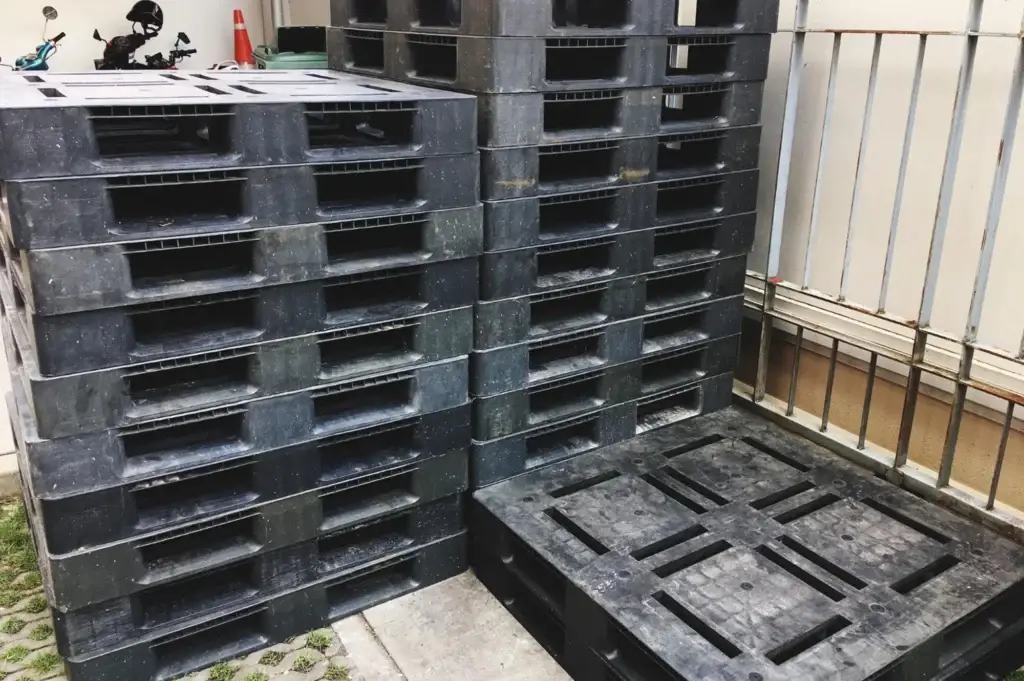
If you’re ordering a new batch of pallets, chances are you’re trying to solve a problem.
Maybe you’re replacing damaged pallets more often than expected or simply looking for a solution that performs better than what you’re using today.
Whatever brought you here, this is the right time to step back and evaluate your options. A few practical considerations now can save your business from years of unnecessary replacements and operational headaches.
Tip 1: Match the Pallet to Your Shipping Cycle
A pallet used once for a customer delivery has a completely different job than one circulating between suppliers, warehouses, and production facilities.
Think about your shipping cycle:
One-way shipping
- Product leaves your facility
- Pallet stays with the customer or is discarded
- Common choice: Wood pallets
Returnable shipping
- Pallet travels between facilities repeatedly
- Same equipment is used for multiple trips
- Common choice: Plastic pallets
A business shipping 500 loads a month may save money with affordable wood pallets, while a manufacturer running daily transfers between facilities may find plastic pallets a better choice.
Tip 2: Choose Based on Your Warehouse Environment
The environment where a pallet works has a direct impact on how well it performs.
- Dry warehouses: Wood and plastic pallets both perform well, so the decision often comes down to shipping needs and budget.
- Cold storage: Plastic pallets resist moisture and won’t absorb water during temperature changes.
- Outdoor storage: Constant exposure to rain and humidity can shorten the lifespan of some pallet types.
- Automated facilities: Plastic pallets with consistent dimensions move more reliably through conveyors and automated systems.
Tip 3: Don’t Buy Based on Price Alone
A lower pallet price can look like a better deal until it disrupts real operations. When evaluating pallets, look beyond the first invoice and consider the total cost of ownership (TCO).
A standard wood pallet priced at $12–$15 may seem like the most economical choice upfront. However, in many distribution environments, it may only last 5–8 trips before it needs repair or replacement due to broken boards, splintering, or forklift damage.
Now compare that with a durable plastic pallet priced at $45–$60, which can often last 50+ trips in controlled warehouse conditions. This is why many businesses work with experienced pallet vendors in St. Louis who can help compare upfront pricing against long-term performance.
Tip 4: Analyze How The Pallets Are Handled
A pallet is used in different stages of a shipment cycle by different people. A failure at any single point can create delays, product damage, or added labor costs downstream.
At each stage, the pallet is effectively re-evaluated based on how well it performs under different conditions:
- Forklift operators:
They need consistent entry points, stable stringer or block structure, and resistance to breakage during repeated lifting. A poorly designed pallet can slow down loading cycles or increase the risk of workplace injury due to shifting loads or splintering wood. - Warehouse teams:
In storage environments, pallets must stack evenly, maintain load integrity over time, and fit racking systems without warping or overhang. Even small dimensional inconsistencies can reduce usable warehouse space or create unstable stacks that require rework. - Transportation providers:
During shipping, pallets are exposed to vibration, compression, and shifting forces. Weak deck boards or inconsistent construction can lead to load collapse, product damage, or inefficient trailer utilization due to unstable stacking. - Customer receiving teams:
At the final stage, the pallet becomes part of the customer experience. It should arrive intact, easy to unload, and not require extra labor to correct damage or restack goods. A poor-quality pallet can reflect negatively on the supplier even if the product itself is undamaged.
Tip 5: Standardize Sizes Across Your Supply Chain
Using too many pallet sizes makes the transport process complex. Let’s say your warehouse uses multiple pallet sizes; employees may spend extra time deciding where products should be stored or which pallet fits a specific shipment. A standardized pallet program can help your operation to:
- Improve warehouse organization
- Maximize trailer and storage space
- Simplify forklift handling
- Support automation systems
Tip 6: Plan for Future Growth
Your pallet program can become outdated even when the pallets are still usable. A growing business may start with manual handling and later add conveyors or plan to expand warehouse space to increase production. The equipment that businesses use should be ready to support those situations.
If the pallets aren’t suited to those changes, you’ll eventually have to replace them just to keep up, so choose after analyzing your next stage.
Tip 7: Choose the Right Pallet Supplier
The wrong supplier can turn a simple pallet shortage into a recurring purchasing problem. If specifications change, volumes increase, or you suddenly need a different pallet type, you’re back to searching for another source. For a supply chain operation, constantly starting that process over wastes time and makes it harder to keep your material handling equipment consistent.
B&G Industries gives businesses access to wood pallets, plastic pallets, and bulk containers. That makes it easier to adjust your pallet strategy without rebuilding your supplier list every time your operation changes. As a pallet supplier in St. Louis, B&G Industries can give you more options at one stop.