
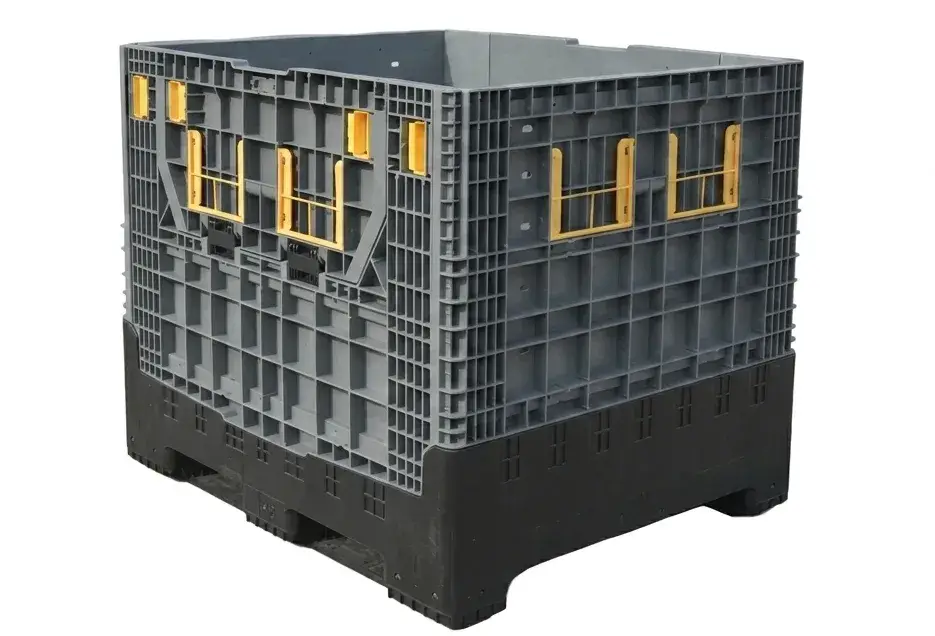
How to Break the Expensive Cycle of Packaging Waste
Across B2B supply chains, disposable packaging has become part of everyday operations. Cardboard Gaylords, wooden pallets, shrink wrap, and single-use containers are purchased, used once, and thrown away, only to be purchased again for the next shipment.
While this may seem like the normal cost of doing business, it creates a cycle of recurring purchases and growing packaging waste. Instead of supporting your operation, disposable packaging becomes another expense that requires constant management.
Breaking this cycle starts with changing how you think about packaging. Rather than treating it as a short term consumable, manufacturers should choose reusable bulk containers to deliver good value.
How Reusable Bulk Containers Reduce Waste
Reusable bulk containers and industrial grade solutions are the direct answer to the inefficiencies of linear packaging. Unlike a single-use box, a bulk container is built to be used again and again.
Built For Tough Industrial Use
Unlike cardboard that can weaken from moisture, heavy loads, or rough handling, reusable bulk containers are typically manufactured from durable materials like high-density polyethylene (HDPE) or polypropylene (PP).
Easier to Store, Stack, and Move
Their uniform size makes them easier to stack, store, and move with forklifts or pallet jacks, helping warehouses stay organized and operate more efficiently.
Save Space When Empty
Many reusable shipping containers can be folded when they’re empty. By reducing the space required for empty packaging, there can be an improvement in warehouse efficiency and lower transportation costs within a closed-loop supply chain.
Designed for Hundreds of Uses
A cardboard box is used once and then replaced. A reusable bulk container is built to last through multiple shipping cycles. Over time, one container can replace many single-use boxes, helping manufacturers reduce packaging waste and lower ongoing packaging costs.
Instead of following a cycle of buying, using, and throwing away packaging, manufacturers create a system where containers are returned, reused, and put back into service. This supports a more sustainable packaging solution for manufacturers while making day-to-day operations more efficient.
Why Manufacturers Are Replacing Disposable Packaging Systems
Manufacturers aren’t switching to reusable packaging simply to reduce waste. They’re making the change because traditional disposable packaging no longer supports the demands of modern manufacturing and supply chain operations.
| Business Need | Disposable Packaging | Reusable Bulk Containers |
|---|---|---|
| Packaging Costs | Requires continuous purchasing for every shipment | Higher upfront investment, but reusable across multiple shipping cycles |
| Packaging Waste | Creates large amounts of cardboard, plastic wrap, and pallet waste after each shipment | Reduces single-use packaging waste by replacing disposable materials |
| Product Protection | Can weaken due to moisture, heavy loads, or rough handling. | Durable construction provides protection during storage, handling, and transportation. |
| Supply Chain Reliability | Dependent on a constant supply of new packaging materials | Reusable shipping containers stay in circulation for years, supporting closed-loop supply chains |
How a Closed Loop Supply Chain Maximizes ROI
Investing in reusable bulk containers delivers the greatest return when they’re part of a closed-loop supply chain. Instead of using packaging once and throwing it away, containers move in a continuous cycle: they’re shipped, returned, refilled, and used again.
A closed loop supply chain doesn’t just reduce packaging waste; it also helps make better use of warehouse space. Many reusable shipping containers are designed to collapse or fold when empty, allowing more containers to be stored in less space and reducing the cost of return shipments.
Choosing the Right Bulk Container Provider
Because reusable bulk containers become part of your daily operations, choosing the right provider is just as important as choosing the right product.
When evaluating a supplier, here are a few key factors to consider:
- Customization & Expert Guidance: Every manufacturing operation is different. Look for a provider that takes the time to understand your product dimensions, load requirements, warehouse layout, and shipping process before recommending a solution.
- Proven Strength and Performance: Reusable bulk containers are designed for repeated industrial use, so durability matters. Your provider should be able to demonstrate the container’s performance well.
- Long-Term Support: Your packaging needs may evolve as your business grows. Choose a supplier that offers ongoing support.
That’s the approach we take at B&G Industries. We don’t just supply containers; we work with manufacturers to develop reusable packaging solutions that fit their operations today and continue delivering value as their business grows.
Conclusion
As packaging costs continue to rise and supply chains become more demanding, manufacturers should rethink their packaging approach. Investing in industrial reusable bulk containers is a strategic move toward better efficiency, lower operating costs, and long-term reliability.
Whether you’re exploring reusable packaging for the first time or expanding your packaging system, B&G Industries can help you find a solution tailored to your business. Talk to our team to learn how the right reusable bulk container system can support your warehouse.