
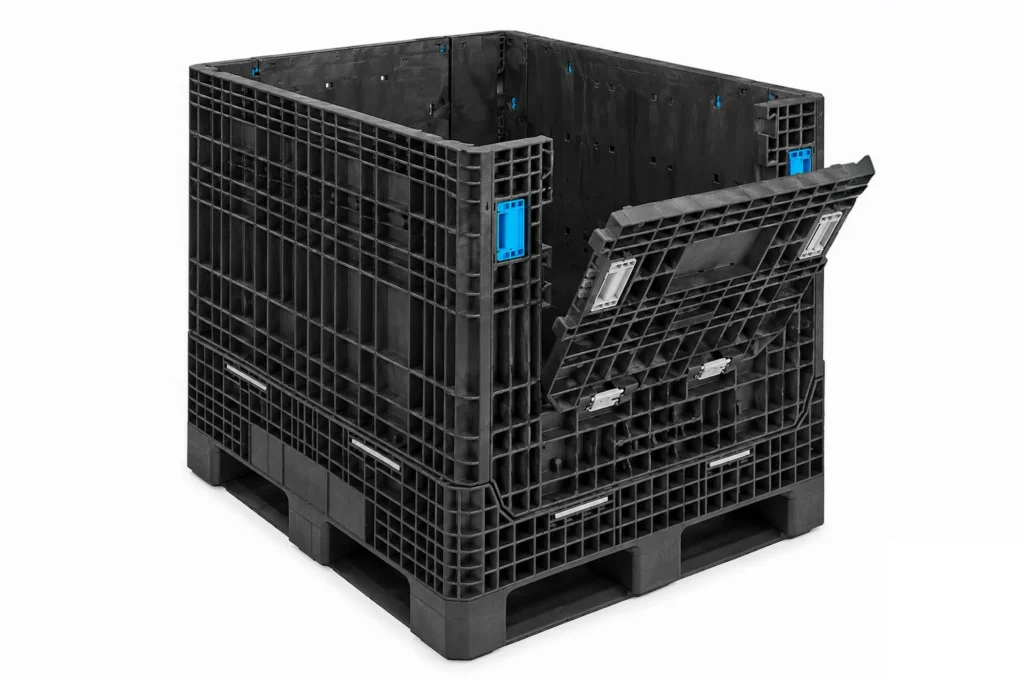
A 2,500-pound stack of manufacturing components doesn’t fall off a warehouse rack for no reason. It’s usually either the container was rated for less weight than it was carrying, it got stacked wrong, or it wasn’t built for the conditions it sat in for months. Any one of those is enough to damage your inventory, stop production, and put your team at risk.
These Bulk container failures cannot be blamed only on defective products. Before placing your next bulk container order, it’s important to understand the factors that ensure safe transit and successful material handling.
What Are Reusable Bulk Containers?
At its core, a reusable bulk container is a heavy-duty, industrial structural plastic box designed to safely store, protect, and transport bulk materials throughout distribution cycles. Unlike single-use cardboard or wood, they’re built to be reused, making them a smarter long-term investment for businesses.
Built from high-strength materials such as high-density polyethylene (HDPE) and polypropylene (PP), reusable bulk containers are designed to withstand heavy loads, frequent handling, and demanding warehouse environments.
Why Reusable Bulk Containers Deliver Better Long-Term Value
The shift from cardboard boxes to reusable bulk containers is driven purely by ROI. A high-quality plastic container has a larger initial investment, they eliminate the recurring costs of purchasing and repairing.
In addition, reusable bulk containers provide better product protection, reduce packaging waste, and withstand repeated use. Over their service life, reusable bulk containers deliver lower total cost of ownership (TCO) than disposable packaging, making them a smart investment for warehouses and manufacturers focused on long-term value.
Types of Reusable Containers
The first step in choosing the right reusable bulk container is deciding between two primary designs: collapsible bulk containers and rigid straight-wall containers. Each is built for different operational needs, and selecting the right one can protect your products throughout the supply chain.
Collapsible Bulk Containers for Space-Saving Return Logistics
Collapsible bulk containers, also known as knockdown bins, are designed to fold flat when they’re empty. This simple feature helps businesses save valuable warehouse space and significantly reduce return shipping costs.
Because collapsed containers take up much less space than assembled ones, more units can fit on a truck during the return journey. For example, a container with a 3:1 return ratio allows three collapsed containers to occupy the same space as one fully assembled container.
Collapsible bulk containers are ideal for businesses that:
- Ship products between multiple facilities
- Operate closed-loop supply chains
- Need to reduce return freight costs
- Have limited warehouse storage space for empty containers
Rigid Straight-Wall Bulk Containers for Heavy-Duty Storage
Rigid bulk containers are built for maximum strength. Unlike collapsible containers, they have solid one-piece sidewalls without hinges or moving parts, allowing them to support heavier loads and offer strong stacking stability.
Rigid bulk containers are used for:
- Metal parts and industrial components
- Automotive manufacturing
- Food processing and bulk ingredients
- Chemicals and granular materials
Different Sizes of Reusable Bulk Containers
Choosing the right bulk container size is just as important as choosing the right container type. The correct dimensions help maximize trailer space, improve warehouse storage efficiency, and ensure compatibility with racking systems and forklifts.
48″ × 45″ Bulk Containers
The 48″ × 45″ footprint was originally developed to meet Automotive Industry Action Group (AIAG) standards; this size is optimized for efficient trailer loading and industrial material handling.
Because two 48″ × 45″ containers fit side by side in a standard 53-foot trailer, businesses can maximize trailer space, improve load stability, and reduce the risk of cargo shifting during transit.
Best for:
- Automotive manufacturing
- Industrial components
- Appliance manufacturing
- Closed-loop supply chains
40″ × 48″ Bulk Containers
The 40″ × 48″ matches the dimensions of a standard GMA (Grocery Manufacturers Association) pallet; it works well with existing pallet racks, forklifts, pallet jacks, and conveyor systems.
Best for:
- Distribution centers
- Retail warehousing
- Third-party logistics (3PL)
- General material handling
How Do You Choose the Right Container Height?
While footprint determines floor space, container height shows how much product each container can hold. Selecting the appropriate height depends on your product weight, volume, and handling requirements.
| Container Height | Best For |
|---|---|
| 25-inch (Low Profile) | Heavy products like metal parts, castings, and industrial components. Lower sidewalls make loading and unloading easier. |
| 34-inch (Standard Height) | The most versatile option for everyday warehouse and manufacturing applications, gives balance between storage and load handling. |
| 42-inch & 50-inch (High Capacity) | Lightweight but bulky products like plastic components, agricultural products, and high-volume goods that need additional storage capacity. |
How to Choose the Right Bulk Container For Your Industry Needs
Different industries have unique storage, handling, and transportation requirements, so choosing a container with the right material, design, and features can reduce long-term costs.
Manufacturing and Automotive
Manufacturing facilities and automotive plants often handle heavy components that are repeatedly loaded, stacked, and transported throughout production. In these environments, durability and load capacity are the top priorities.
Look for reusable bulk containers made from high-density polyethylene (HDPE) with features such as drop doors that also improve accessibility, allowing workers to retrieve parts more safely and efficiently without having to reach over high container walls.
Recommended features:
- Reinforced HDPE construction
- Load capacity of 2,000–2,500 lbs or higher
- Drop doors for easy access
- High stacking strength
Food Processing and Agriculture
For food processing, agriculture, and pharmaceutical applications, cleanliness is just as important as durability. Containers must be easy to sanitize while helping prevent contamination throughout storage and transportation.
Choose containers made from FDA-approved virgin polyethylene or polypropylene with smooth interior walls that are easy to clean and don’t trap food particles or moisture. For fresh produce and harvested crops, ventilated designs help improve airflow and maintain product quality.
Recommended features:
- FDA-approved materials
- Smooth, easy-to-clean interior walls
- Ventilated options for produce
- Moisture- and chemical-resistant construction
Retail, Distribution, and Logistics
Distribution centers and retail warehouses prioritize speed, space utilization, and efficient material handling. Containers need to move quickly through storage systems, loading docks, and transportation networks.
A 40″ × 48″ footprint works well because it’s compatible with standard pallet racking, forklifts, pallet jacks, and conveyor systems. Four-way forklift entry also helps operators load, unload, and reposition containers from any direction, improving productivity in fast-paced environments.
Recommended features:
- Standard 40″ × 48″ footprint
- Four-way forklift entry
- Stackable design
- Load capacity of 1,500–2,000 lbs
New vs. Used Bulk Containers: Which Should You Buy?
One of the biggest purchasing decisions businesses face is whether to invest in new or used bulk containers. The right choice depends on your operational requirements, budget, compliance standards, and long-term goals. While new containers offer maximum customization and regulatory compliance, high-quality used containers can deliver exceptional value for many industrial applications.
When New Bulk Containers Are Ideal
New bulk containers are the best choice when your operation requires strict compliance, precise specifications, or custom features.
- Food processing and pharmaceutical facilities that require FDA-approved virgin resin to meet hygiene and safety standards.
- Automated warehouses where consistent dimensions are critical for conveyors, robotics, and automated storage systems.
- Custom applications requiring RFID tags, company branding, color coding, or specialized container configurations.
When Used Bulk Containers Are Ideal
If your operation focuses on manufacturing, automotive parts, warehousing, or recycling, used bulk containers can be a cost-effective alternative without sacrificing performance.
Well-maintained used containers often provide the same structural strength and load capacity as new ones while costing 40–60% less. Minor cosmetic wear, like scratches or discoloration, does not affect their ability to safely store, transport, or stack materials.
At B&G Industries, every used bulk container is thoroughly inspected to ensure it meets high standards for structural integrity and performance before being offered for sale. This allows businesses to reduce upfront costs while investing in reliable material handling solutions they can trust.
Conclusion
With so many container types, sizes, and configurations available, making the right investment starts with understanding what your operation truly needs. As a trusted bulk container provider, B&G Industries helps warehouses and manufacturers identify the right container solutions for their unique requirements, offering both new and thoroughly inspected used inventory. Contact our team today to discuss your application and discover a bulk container solution built to support your business for years to come.