
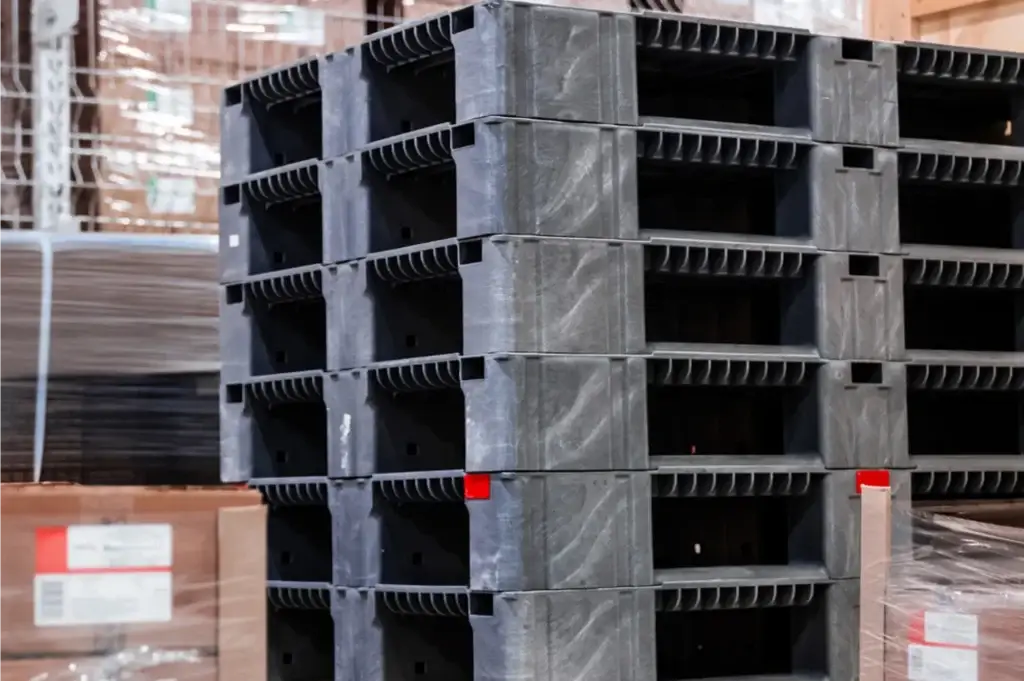
Walk through any busy shipping dock or warehouse, and you’ll find pallets constantly exposed to heavy loads, forklift impacts, and daily use. A damaged pallet may not seem like a major issue at first, until it jams an automated conveyor line or is unstable under heavy load. When you are constantly replacing worn-out equipment just to keep workflows moving, your margins could take an expensive hit.
For years, wood pallets have been treated as a low-cost, disposable option. But constantly replacing worn-out pallets creates operational slowdowns and quietly adds to the costs.
Plastic Pallet Lifespan Is 10X Longer Than Wood
But getting that kind of lifespan is not just adding plastic pallets into the routine. Daily handling, storage conditions, and maintenance all impact how well pallets hold up over time.
To understand their true value, it’s important to look at how long plastic pallets typically last, what causes them to wear out faster, and how they can give a low operational cost and stronger ROI.
Lifespan vs. Service Life: What’s the Difference
Although the terms are often used together, lifespan and service life are not the same.
While service life measures how long a pallet has been in use, lifespan relies more on how well the pallet continues to perform under warehouse conditions.
For example, some durable plastic pallets may still look perfectly fine after 10 years of use but have already exceeded their recommended handling cycles. On the other hand, a pallet with an estimated 5-year service life used lightly in a controlled warehouse environment may continue performing well even after 8 years.
At the same time, pallets exposed to heavy loads, constant forklift traffic, outdoor storage, or extreme temperatures may wear out within 3–4 years, even if they haven’t reached their expected lifespan on paper.
Do All Plastic Pallets Have the Same Lifespan?
A plastic pallet used for one-way export shipping will not perform the same way as a heavy-duty pallet moving through a high-volume warehouse every day. While some plastic pallets are designed for short-term transport, others are built to withstand years of repeated forklift handling, rack storage, and distribution cycles.
| Plastic Pallet Type | Typical Lifespan | Common Use & Performance |
|---|---|---|
| Virgin Material Plastic Pallets | 8–12+ years | Made from high-quality materials for strong durability and long-term warehouse performance. |
| Recycled Plastic Pallets | 6–10 years | Cost-effective and durable for general warehouse and logistics operations. |
| Heavy-Duty Plastic Pallets | 10+ years | Designed for high loads, repeated forklift handling, and demanding warehouse environments. |
| Light-Duty Plastic Pallets | 3–5 years | Best suited for lighter loads, export shipping, or occasional use. |
| Hygienic/FDA-Approved Pallets | 8–15 years | Common in food, beverage, and pharmaceutical environments requiring sanitation and durability. |
When Plastic Pallets Are Most at Risk
A plastic pallet is actually more likely to be damaged when it is not in use. This is because of the way empty units are mishandled or stored incorrectly in busy warehouse areas.
While durable plastic pallets resist moisture, mold, insects, and chemical exposure far better than wood pallets, certain warehouse conditions can still shorten their lifespan.
Plastic pallets are most at risk during:
- Improper forklift entry that cracks pallet walls or legs
- Uneven or overloaded weight distribution that causes sagging or warping
- Excessive rack loads beyond the pallet’s rated capacity
- Outdoor UV exposure and extreme temperatures
- Constant use in high-traffic warehouse environments
If you want to extend a plastic pallet’s lifespan, proper handling, correct load distribution, and appropriate storage conditions all play a major role.
Pro Tips for Maximizing Plastic Pallet Lifespan
A few simple warehouse handling and storage practices can easily add years of service life to your pallets. To keep pallets performing reliably for years, focus on these four core areas:
Train Forklift Operators on Proper Handling
Forklift impact is one of the most common causes of pallet damage. Operators should enter pallet openings slowly and evenly to avoid cracking the pallet legs or outer edges. Rough handling, pushing pallets across the floor, or entering at sharp angles can gradually weaken the structure.
Follow Weight Capacity Guidelines
Plastic pallets can handle heavy loads, but weight should always be distributed evenly across the deck. Overloading or placing too much weight in one area can lead to sagging, bending, or warping over time.
Store Empty Pallets Correctly
When not in use, empty pallets should be stacked evenly and stored away from busy warehouse traffic areas. Uneven stacking can place unnecessary pressure on the bottom pallets.
Inspect and Clean Pallets Regularly
Routine inspections help identify cracks, warping, or structural damage before pallets fail during operations. Create a schedule to power-wash or chemically sanitize your pallets, especially in food and pharmaceutical environments.
Breaking Down the ROI of Plastic Pallets
The true ROI of plastic pallets becomes easier to understand when businesses compare lifecycle costs instead of upfront pricing alone. It cannot be denied that a high-quality plastic pallet needs a larger initial investment than a wood alternative. However, looking only at the purchase price brings a blind spot into your budget.
Lower Replacement Costs Over Time
A standard wood pallet typically survives only 5–10 trips before it breaks, splits, absorbs moisture, or becomes unusable, giving it an average working lifespan of around 1–3 years in demanding warehouse environments. In contrast, a heavy-duty plastic pallet can handle 100+ trips and remain in active use for 10 years or more.
This gives a major difference in operational costs. Instead of constantly spending money on reordering damaged pallets or repairing broken units. Businesses can opt for a durable and reusable solution.
Better for International Shipping
If a business handles international shipping, compliance fees can drain margins. Because wood can harbor pests, wooden shipping requires strict international regulations (ISPM 15) that require expensive heat treatments, chemical fumigation, and paper certifications.
Plastic pallets are mostly exempt from ISPM 15 regulation. This reduces customs delays and compliance-related expenses.
Final Thoughts: Are Plastic Pallets Worth the Investment
Shifting to durable plastic pallets is the fastest way to turn a recurring operational expense into a long-term material handling asset. A high-quality plastic pallet helps reduce the hidden costs tied to constant pallet replacement.
With proper warehouse handling and routine maintenance, plastic pallets can stay in circulation for years, supporting warehouse workflows. If you’re looking for trusted plastic pallet dealers in St. Louis, connect with the industrial specialists at B&G Industries to stop managing pallet failures and start scaling your material handling efficiency with a custom pallet tailored to your facility’s exact load requirements.