
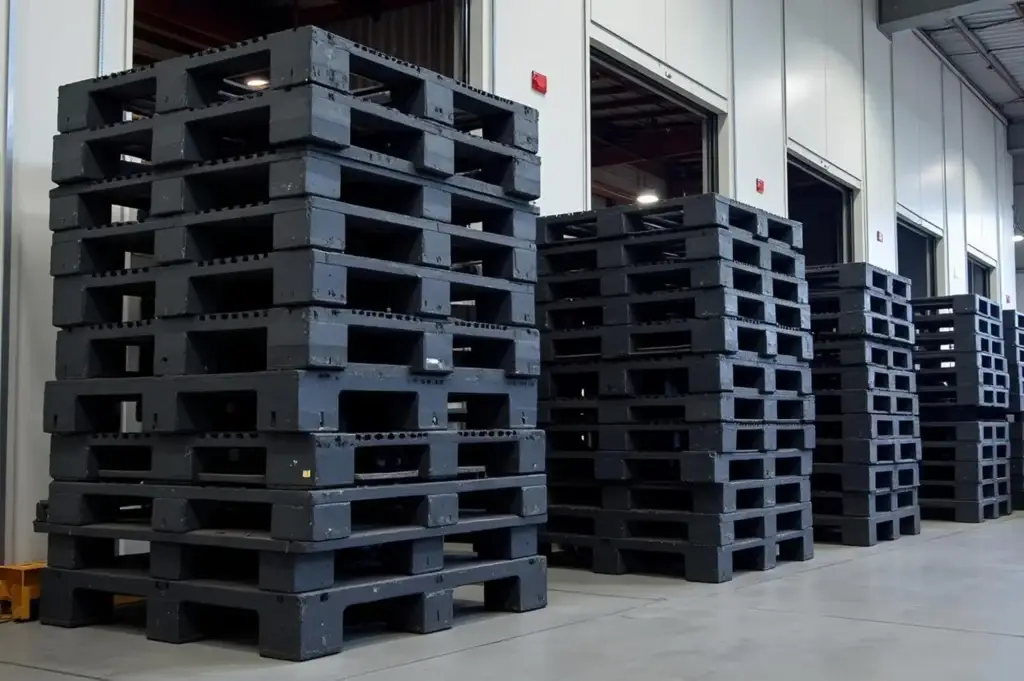
A single damaged pallet might not seem like a major warehouse issue until it delays a shipment, damages inventory, or creates replacement costs for operations teams already managing tight logistics schedules. In high-volume St. Louis warehouses, where products move constantly through storage racks and distribution networks, even small pallet failures can create larger operational problems over time.
That is one reason more warehouses are investing in plastic pallet systems designed for durability, repeat use, and consistent performance. As distribution pressures increase and inventory turnover accelerates, the right pallet system directly affects how efficiently a warehouse runs.
This guide explores the different types of plastic pallets that warehouse managers rely on, and the key factors to evaluate before purchasing a long-term logistics solution.
Why Use Plastic Pallets?
Plastic Pallets help warehouses move inventory more efficiently while reducing product damage, pallet replacements, and handling disruptions.
Unlike traditional pallets that can crack, absorb moisture, or wear down quickly under constant forklift movement, plastic pallets are designed for repeat use in demanding warehouse environments.
What Materials Are Plastic Pallets Made From
Warehouses operate as interconnected systems in which storage, transportation, labor, and inventory movement all depend on the uninterrupted flow of goods. Pallets sit at the center of that system; they work with forklifts, racking systems, conveyor equipment, and shipping trailers every day, making them among the most heavily used components in any warehouse.
Most industrial plastic pallets are manufactured using three primary material categories, each designed for different handling conditions and warehouse requirements.
High-Density Polyethylene (HDPE)
High-density polyethylene is one of the most widely used materials in plastic pallet manufacturing due to its durability and impact resistance. It performs well in warehouse environments with constant forklift traffic and exposure to moisture or fluctuating temperatures.
Because HDPE resists cracking, warping, and chemical exposure, it is used in food-grade warehouses, pharmaceutical storage facilities, and in export shipping. Many warehouse operators also prefer HDPE pallets for their smooth surfaces and easier sanitation, especially in facilities with strict hygiene standards.
Polypropylene (PP)
Polypropylene is another commonly used plastic pallet material known for its rigidity and structural strength. Compared to HDPE, PP pallets are generally stiffer and better suited for applications that require high static load capacities.
Warehouses using automated conveyor or rack storage systems rely on polypropylene pallets because they maintain their shape under continuous operational pressure.
While they can be slightly less impact-resistant than HDPE in extremely cold environments, polypropylene pallets remain a reliable option for manufacturing facilities and industrial storage operations.
Recycled Plastics
Recycled plastic pallets are designed for businesses looking for a more cost-effective and sustainable material handling solution. These pallets are manufactured using reclaimed plastic materials while still offering many of the durability and moisture-resistant advantages associated with traditional plastic pallets.
Many warehouses use recycled plastic pallets for closed-loop supply chains, internal warehouse movement, export shipping, or lighter-duty storage applications.
Which Type Of Plastic Pallets Does Your Warehouse Need?
Different warehouse operations have different demands on pallet systems. A distribution center managing rapid inventory turnover may prioritize storage efficiency and lightweight handling, while a manufacturing facility handling heavy product loads may require pallets designed for long-term structural stability.
| Plastic Pallet Type | Primary Purpose | Common Warehouse Use | Key Advantages |
|---|---|---|---|
| Nestable Pallets | Save storage space when pallets are empty | Retail distribution, export shipping, high-turnover logistics operations | Reduce floor space usage, lightweight handling, easier transportation, and improved pallet storage efficiency |
| Stackable Pallets | Support stable vertical stacking with loaded inventory | Boxed goods storage, packaged inventory, warehouse staging areas | Better load stability, improved vertical storage efficiency, reduced shifting during transport |
| Rackable Pallets | Support inventory in elevated warehouse racking systems | Automated warehouses, selective racking systems, and high-density storage facilities | Reinforced load support, reduced pallet deflection, improved rack stability, automation compatibility |
| Heavy-Duty Pallets | Handle oversized loads and continuous warehouse pressure | Manufacturing facilities, automotive warehouses, and industrial material handling | High durability, stronger load capacity, reduced replacement frequency, and long-term operational reliability |
What To Consider Before Buying Plastic Pallets
A pallet that performs well in a standard storage warehouse may not hold up efficiently in every warehouse operation. This is why warehouse managers should evaluate plastic pallets based on operational compatibility rather than treating every pallet as a universal solution.
Choose the Right Load Capacity
Plastic pallet load capacity is not measured by a single number. Warehouses typically evaluate three different load conditions:
- Static load – weight supported while the pallet remains stationary
- Dynamic load – weight supported during forklift movement
- Rack load – weight supported while stored across rack beams
In warehouse operations, dynamic load capacity often becomes the most important factor because pallets experience continuous movement throughout the day. Standard plastic pallets commonly support dynamic loads between 2,000 and 5,000 pounds, depending on pallet design, while heavy-duty rack able pallets can support static loads exceeding 20,000 pounds in certain storage environments.
Consider Forklift and Conveyor Compatibility
Plastic pallets constantly interact with forklifts, pallet jacks, conveyors, and automated material handling systems. Small differences in pallet dimensions or entry design can affect how efficiently products move throughout warehouse operations.
Four-way entry pallets are also commonly preferred in high-turnover distribution environments because they allow forklifts to access pallets from all sides, improving handling flexibility and reducing repositioning time during loading operations.
Evaluate Temperature and Cold Storage Requirements
Warehouse temperatures can affect pallet performance over time, especially in cold storage operations and refrigerated distribution centers. Certain pallet materials maintain flexibility under freezing temperatures, while others become more rigid or brittle during repeated cold exposure.
HDPE plastic pallets are commonly used in cold storage facilities because they resist moisture absorption. Warehouses handling frozen foods, pharmaceutical products, or temperature-sensitive inventory prioritize pallets designed to withstand repeated exposure to cold environments without cracking or warping under operational stress.
Understand FDA, USDA, and Export Compliance Standards
Warehouse operations must meet industry-specific hygiene and shipping requirements. Plastic pallets are commonly used in food-grade, pharmaceutical, and export logistics environments because they are easier to sanitize and maintain compared to traditional pallet materials.
Plastic pallets can also support compliance requirements through:
- FDA-approved material options
- USDA-compliant pallet systems
- ISPM-15 export exemption advantages
- Non-porous and easier-to-clean surfaces
For export operations, plastic pallets simplify international shipping because they are exempt from ISPM-15 heat treatment regulations required for wood packaging materials.
Consider Reusable and Sustainable Pallet Options
Many warehouse operators are shifting toward reusable pallet systems designed for long-term circulation across supply chains rather than short-term shipping use.
In closed-loop logistics operations, reusable plastic pallets can:
- Remain in service for more than 100 trips
- Last between 7 to 10 years under controlled conditions
- Reduce pallet replacement frequency
- Support long-term sustainability initiatives
Why Warehouses Should Focus on Cost Per Trip Instead of Upfront Price
One of the biggest mistakes warehouses make when purchasing pallets is evaluating them only by upfront cost. On paper, a lower-priced pallet may seem like the more economical option. But the real cost of a pallet is measured by how long it performs under daily handling conditions.
This is why logistics operators evaluate pallets using a cost per trip model instead of focusing only on purchase price. The concept is simple: the more operational cycles a pallet completes before replacement, the lower its long-term cost becomes.
For example, a reusable plastic pallet priced at $70 that remains in service for 3 years can deliver a lower operational cost than a low-cost pallet that requires frequent replacement after only weeks of warehouse use.
Many warehouse operators now treat reusable plastic pallets as long-term operational assets because their ROI offsets the higher initial investment over time.
Conclusion
In high-volume warehouse environments, efficiency cannot be determined by one major decision; it includes smaller operational choices that support logistics and transport.
The right plastic pallet system can influence everything from storage density to warehouse safety and inventory flow. As more St. Louis facilities modernize their operations around faster fulfillment cycles and durable logistics, investing in reliable pallet systems has become part of building stronger warehouse storage solutions. For businesses ready to upgrade their pallet systems, B&G Industries is one of the leading plastic pallet dealers in St. Louis, offering customized solutions built around your operational needs. Contact B&G Industries today to find the right pallet system for your facility.